




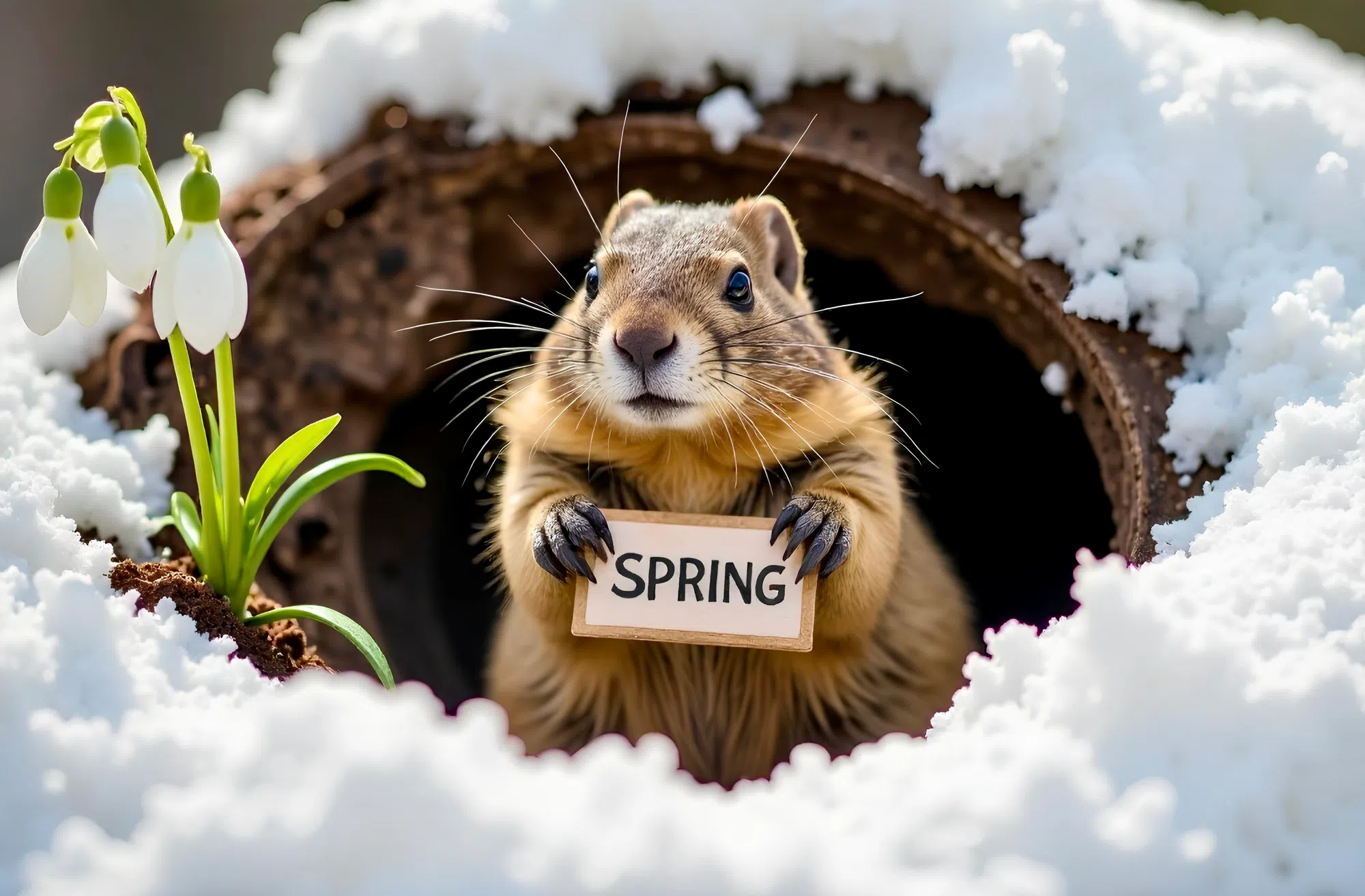
Yesterday was Groundhog Day and we all learned whether or the Groundhog saw his shadow. We’ve talked on the morning show how Phil is hardly the most accurate of predictors. But where did this tradition come from?
Groundhog Day has a fascinating history that blends ancient traditions with modern celebrations. The origins of Groundhog Day can be traced back to ancient European customs, particularly among the Celts and early Christians. February 2nd, known as Candlemas, was a significant day marking the midpoint between the winter solstice and the spring equinox. It was believed that clear weather on Candlemas predicted a longer winter.
The tradition of using animals to predict the weather was brought to the United States by German immigrants. In Germany, it was the badger that played the role of the weather forecaster. However, when Germans settled in Pennsylvania, they found groundhogs to be more common and adapted the tradition accordingly. We don’t need no stinking badgers!
The first official Groundhog Day celebration took place on February 2, 1887, in Punxsutawney, Pennsylvania. This event was organized by a local newspaper editor, Clymer Freas, who convinced a group of businessmen and groundhog hunters to participate. They trekked to Gobbler’s Knob, where the groundhog, Punxsutawney Phil, made his weather prediction.
Today, Groundhog Day is celebrated with much fanfare in Punxsutawney and other parts of the United States and Canada. The festivities include groundhog clubs, picnics, and a lot of media attention.