




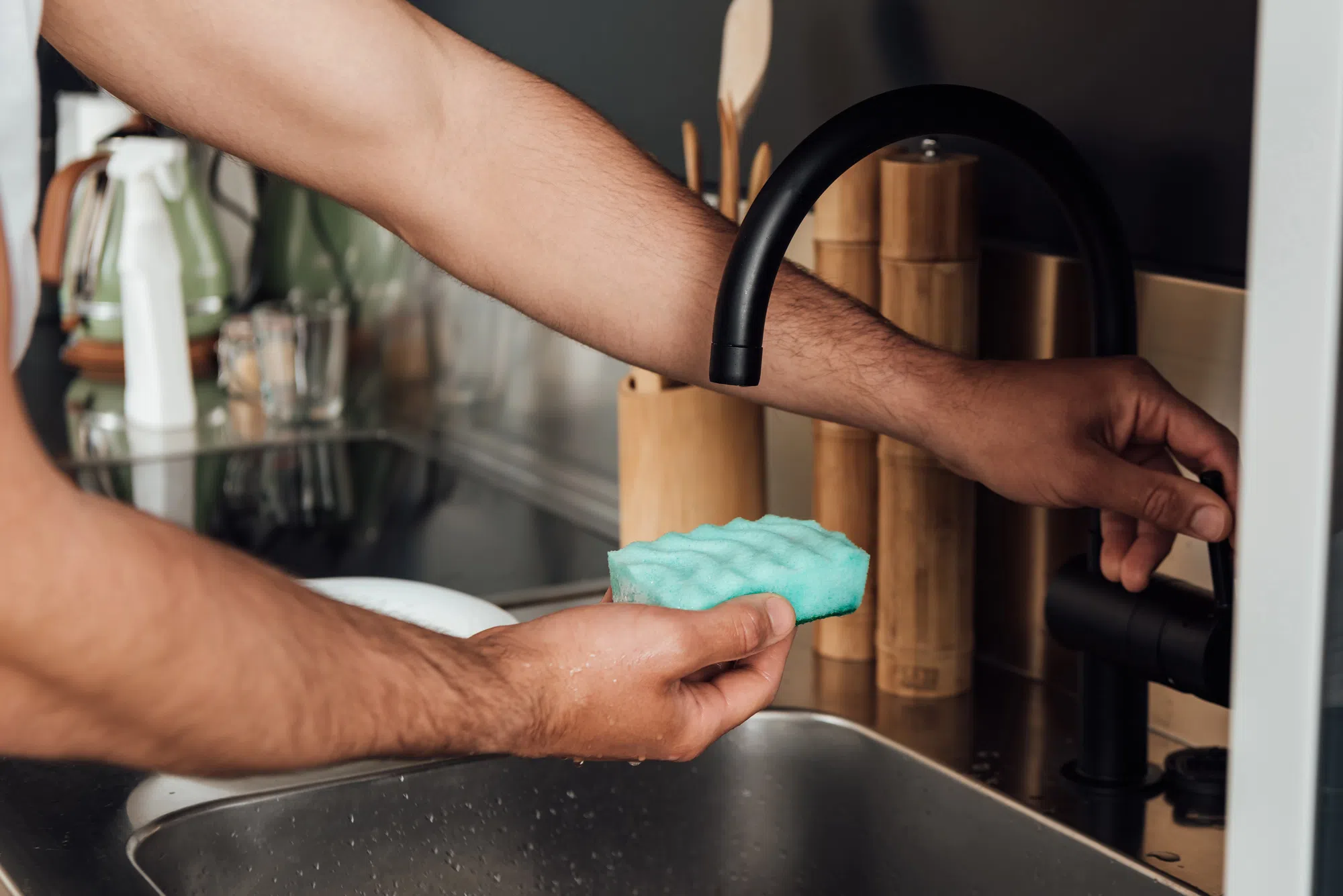
Would you rather lick your toilet seat or your kitchen sponge?
Turns out that sponge might be dirtier than your toilet seat! According to a recent article by HuffPost, kitchen sponges can harbor more bacteria than you ever imagined. We’re talking about salmonella, E. coli, and even fecal matter. This is not a licking matter.
Why Are Sponges So Germy?
Sponges are the perfect breeding ground for bacteria because they’re warm, damp, and full of food particles. Every time you use a dirty sponge, you’re spreading germs instead of cleaning them up. It’s like a never-ending cycle of contamination.
How to Keep Your Sponge Clean
Don’t worry, though! There are ways to keep your sponge clean and reduce the risk of spreading bacteria. Experts recommend putting your sponge in the dishwasher nightly or soaking it in a bleach solution. And remember to replace it every two to three weeks, or sooner if it starts to smell or look damaged.
Other Germy Kitchen Items
Sponges aren’t the only culprits. Your fridge, cutting boards, countertops, and sink can also be hotspots for bacteria. Make sure to clean spills immediately, use different cutting boards for meats and veggies, and disinfect your sink regularly.
Stay Safe in the Kitchen
Food safety starts in our own kitchens. By making smart choices, like properly washing your hands and replacing your sponge, you can prevent illness and keep your kitchen clean.
Want to read the full article? Check it out here.