




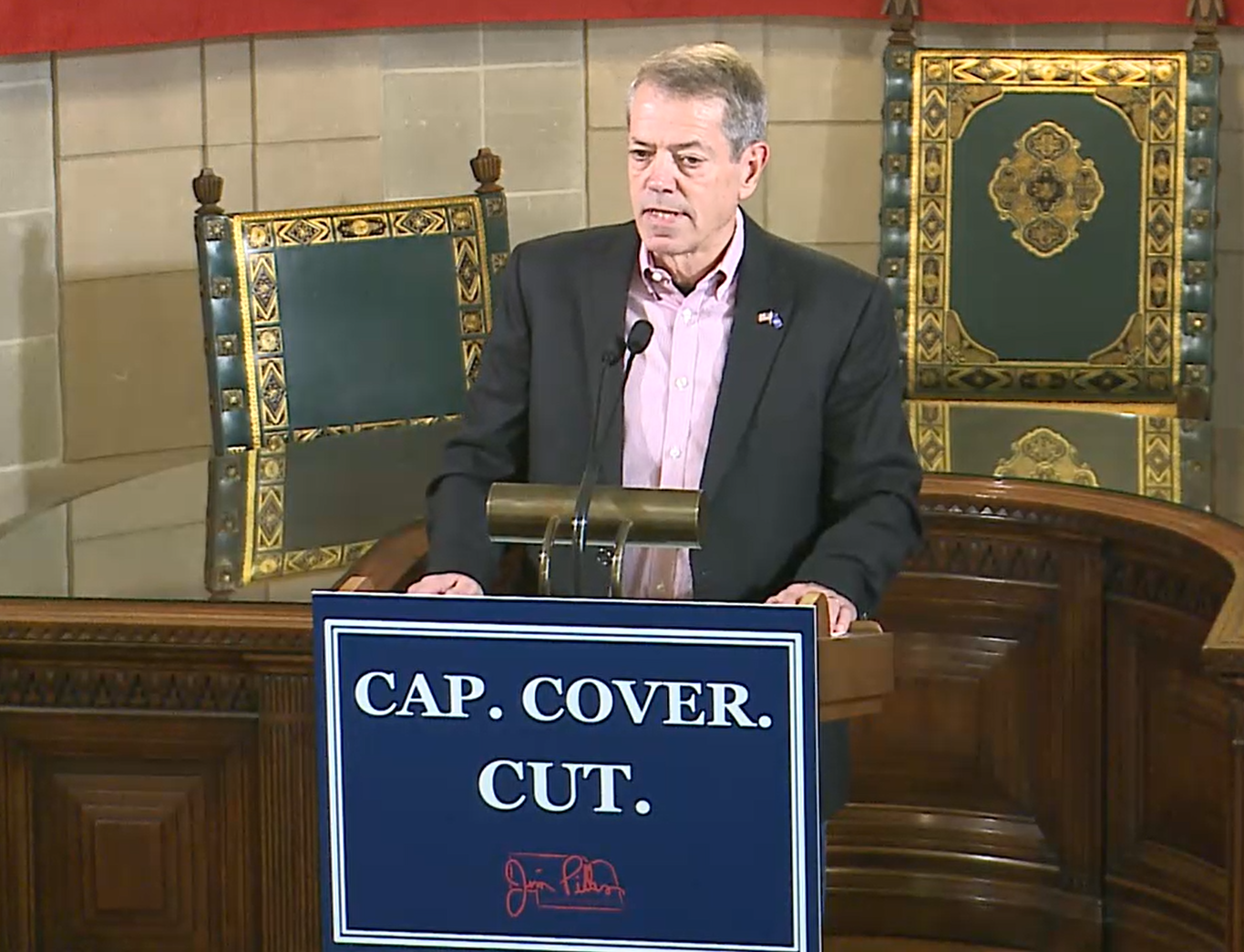
Gov. Jim Pillen wants lawmakers to cap property valuations and local government spending while shifting more school costs to the state during the 2027 legislative session. If they fail to act, he says his team will pursue a property tax measure for the 2028 ballot.
Speaking Friday at the Capitol, Pillen said he wants structural changes beyond property tax credits. “We’re not giving up, and if the Unicameral can’t come together and solve this problem, we’ll solve it ourselves. We will get it on the ballot for 28.”
Pillen described his priorities as “cap, cover, cut”: cap valuations and local spending, cover more K–12 education costs with state funding, and cut property tax collections. He did not announce specific cap levels, a complete funding plan or estimates of how much property owners would save.
To help cover the state’s increased education costs, Pillen called for reconsidering sales tax exemptions and taxing more services. He argued Nebraska’s tax system should better reflect an economy in which people increasingly hire others to perform tasks they once did themselves.
Pillen presented that approach as giving taxpayers more control over their spending. “I’d much rather you have the opportunity to decide what you wanna pay taxes on versus the government telling you. It’s that simple.”
Asked about the effect on Nebraskans who are struggling financially, Pillen said people could perform tasks such as ironing shirts and mowing lawns themselves. He said he believes taxing nonessential purchases could generate sufficient revenue, but did not provide a full list of proposed changes or revenue projections.
Pillen also left the details of a potential ballot effort unresolved. Asked whether he would pursue petitions or seek a constitutional amendment through the Legislature, he said he had not worked out the specifics.
He did not set a firm deadline for deciding whether to begin that effort, saying his next steps would depend on lawmakers’ willingness to work on the issue. Asked about a possible special session, Pillen did not rule one out but said he had not discussed it with legislative leaders.
Alongside his property tax agenda, Pillen promoted a separate federal scholarship tax credit program beginning in January. The program provides federal income tax credits for qualifying cash donations to approved scholarship organizations in participating states.
Pillen said he wants Nebraska families across different educational settings to benefit. “Believe it or not, as we communicate and work, it works for public education, it works for private education, it works for homeschool.”
According to the Internal Revenue Service, participating states must approve scholarship organizations and submit them to the IRS. The credit applies to qualifying contributions beginning Jan. 1, 2027, and is claimed on federal income tax returns.
Pillen also called for continued state spending cuts as his administration prepares for the next legislative session. He said agency leaders should focus on identifying additional savings, but did not outline specific reductions Friday.